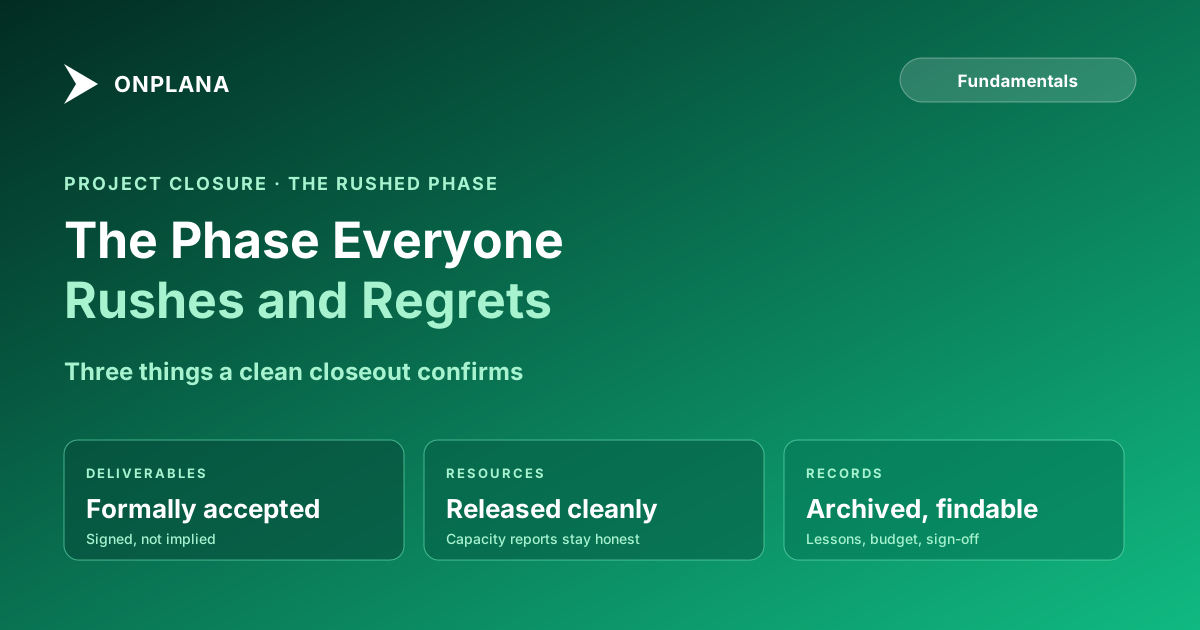
Project Closure: The Phase Everyone Rushes and Later Regrets
Project closure gets skipped more than any other phase. A checklist for deliverables, resource release, contracts, lessons, and archiving in an afternoon.
The kickoff for the next project starts Monday. Half the team already has calendar invites for it. The project that just wrapped, the one that shipped last month, never got a formal project closure: no documented acceptance, no resource release, no lessons captured, just a Slack channel that went quiet and a project code still showing "active" in the PMO's tracker.
Nobody decided to skip closure. It just lost every competition for attention against a project with an actual start date and a sponsor asking when the team is available. That's the pattern behind almost every unclosed project: not negligence, just a phase with no urgent deadline losing out to one that has a very urgent deadline.
TL;DR. Project closure means confirming deliverables were formally accepted, releasing resources so they show correctly as available, closing contracts and reconciling the budget, capturing lessons learned while the team still remembers the details, and archiving records somewhere the next audit or the next similar project can actually find them. It rarely takes more than a day of focused work. Skipping it doesn't save that day; it just moves the cost onto the next project, which repeats mistakes nobody wrote down and inherits resource and budget confusion nobody cleaned up.
Why Does Closure Get Skipped Every Time?
Closure loses the competition for attention because it produces nothing visible. A shipped feature has a demo. A signed contract has a signature. A closed project has, at best, an updated status field in a tracker nobody's actively watching anymore. There's no natural moment where skipping it becomes an emergency, so it gets deferred indefinitely, one sprint at a time, until the team has scattered onto three other projects and nobody has the context to close it properly even if they wanted to.
The second reason is more structural: most organizations measure delivery, not closure. A PM's performance conversation covers whether the project shipped on time and on budget, rarely whether the closeout was done cleanly. Without that incentive, closure competes for time against work that's actually being measured, and it loses.
The cost of skipping it doesn't disappear; it just becomes invisible until it isn't. A resource who's still nominally allocated to a "closed" project shows up in a capacity report as unavailable months after they've moved on, quietly distorting the next round of resource planning. A contract left technically open racks up renewal fees nobody's tracking. And the lessons that would have saved the next project three weeks of the same mistake never get written down, because by the time anyone thinks to ask, the people who'd remember are three projects removed from the details.
What Project Closure Actually Involves
Closure is five distinct activities, not one generic wrap-up meeting, and treating it as five separate items is what keeps any one of them from getting silently dropped.
Confirming deliverables and getting formal acceptance. The sponsor or client explicitly signs off that what was delivered matches what was promised, in writing, not implied by silence.
Releasing resources cleanly. Team members are formally freed from the project's allocation, so capacity systems and resource managers have an accurate picture of who's actually available.
Closing contracts and reconciling the budget. Vendor contracts tied to the project are formally ended, final invoices are reconciled, and the budget is closed against actuals rather than left open indefinitely.
Capturing lessons learned. What worked, what didn't, and what specifically should change next time, documented while the people who lived it still remember the details.
Archiving records. Project documentation, decisions, and data go somewhere retrievable, not scattered across whichever tools happened to be in use when the project was active.
Each of these has an owner, a deadline, and a specific artifact it produces. Treating closure as one vague "wrap things up" task is exactly how two or three of the five quietly never happen.
How Do You Get Formal Acceptance, Not Just a Shrug?
The most common closure gap isn't skipping acceptance entirely; it's treating implicit non-objection as acceptance. The deliverable shipped, nobody complained, so the PM assumes it's accepted. That assumption is the reason disputes about scope and quality resurface months later, when the sponsor's memory of what was actually promised has drifted from what actually got built, and there's no signed record to settle the disagreement.
Real acceptance is explicit and specific. It names what was delivered, confirms it against the criteria set at the start of the project (ideally the same acceptance criteria captured in the project charter and carried into the original project plan), and is signed or formally confirmed by the person with authority to accept it, not just anyone who happened to reply to the email. For projects with multiple deliverables, acceptance should be tracked deliverable by deliverable, not as one blanket "the project is done" sign-off that papers over which specific pieces were actually verified.
The practical version: send the sponsor a short, specific acceptance document, listing each deliverable against its original acceptance criteria, and get an explicit yes in writing before the team disperses. Waiting until after the team has moved on makes chasing that signature dramatically harder, because the people who could explain a disputed detail aren't reachable in five minutes anymore.
Releasing Resources Without Leaving a Mess
A resource who's still shown as allocated to a finished project distorts every capacity decision made after that point. The resource manager sees them as unavailable, other PMs can't request their time, and the organization is effectively planning around capacity that doesn't exist.
- Confirm the actual last date each resource is needed, which is rarely the same date for everyone; QA often wraps a week after development, documentation sometimes trails by more.
- Update the resource management system or portfolio tool to reflect the release date for each person, not just a blanket "project closed" flag that doesn't specify who's free when.
- Notify each resource's functional or people manager directly that the assignment has ended, rather than assuming the project's closure will automatically propagate to their calendar.
- Confirm equipment, access, and licenses tied to the project are returned or deprovisioned, especially for contractors and vendor resources whose access should end cleanly with the engagement.
- Thank the team specifically, naming what they actually contributed. It costs nothing and it's the detail people remember about whether a project felt well-run at the end.
Closing Contracts and Budgets Cleanly
Contracts and budgets left technically open after the work has finished are a quiet, recurring cost: renewal fees on a contract nobody's using, a budget line that stays flagged as active and distorts departmental forecasting, and an audit finding waiting to happen the next time finance reconciles open commitments against actual spend.
- Confirm every vendor contract tied to the project has a defined end, either a natural expiration or a formal termination, and that the vendor has confirmed it.
- Reconcile final invoices against the budget, resolving any discrepancy before the project's budget code is closed, not after.
- Formally close the budget or project code in the finance system, so it stops appearing as an open commitment in departmental reporting.
- Document the final actual cost against the original approved budget, which becomes the input for both lessons learned and any future business case that cites this project as a reference point.
- Confirm any withheld retention or final payment terms are settled, particularly on fixed-price vendor contracts where a final payment is contingent on formal acceptance.
Capturing Lessons While the Memory Is Still Fresh
Lessons captured months after a project ends are lessons filtered through hindsight, group consensus, and whoever happens to still remember the details, which usually isn't everyone who lived through the actual decision points. The value of a lessons-learned session decays fast, and most organizations wait far longer than the decay curve allows.
This is the same logic behind treating lessons learned as a discipline rather than a formality: they only hold value when they're distilled while the people who lived them can still speak to specifics, not months later from memory. The session that actually produces something useful covers three questions, asked specifically rather than generically: what would we repeat exactly as we did it, what would we change and why, and what surprised us that we should watch for earlier next time. Lessons learned that people actually read later requires being specific at the point of capture, not generic; "communication could have been better" helps nobody, while "the vendor's API documentation was wrong about auth scopes and cost us four days" is something the next PM can actually check for.
Schedule the lessons-learned session in the project's final week, while the deliverable is still fresh and before the team scatters onto other work. Waiting for a "proper" retrospective meeting three weeks later, after everyone's mental context has moved on, is how most lessons-learned sessions end up producing three bland platitudes instead of anything a future project could actually use.
A Project Closure Checklist That Takes an Afternoon
- Confirm every deliverable against its original acceptance criteria and collect explicit, written sign-off from the person with authority to accept it.
- Set and communicate the release date for every resource, individually, and update the resource management system to match.
- Reconcile final costs against the approved budget and formally close the budget or project code in the finance system.
- Confirm every vendor contract tied to the project has ended, with final invoices settled and any retention released.
- Run a specific, detail-driven lessons-learned session in the project's final week, before the team disperses.
- Archive the project's key artifacts, the charter, the final schedule, the acceptance documents, and the lessons-learned notes, somewhere the next similar project or a future audit can actually find them.
- Update the PMO's tracker or portfolio view to reflect the project as formally closed, not just functionally finished.
- Send a short closure summary to the sponsor and steering committee, the same audience that would otherwise be chasing status updates through the project's final weeks, confirming what shipped, what it cost against budget, and where the record now lives.
If the closing project is also changing hands, the handover is a separate piece of work from closure; the project manager handover checklist lists what the incoming PM needs in writing and in the room.
None of these eight steps takes more than an hour on its own. What makes closure feel bigger than it is isn't the checklist; it's doing all eight at once, in a rush, after the team has already scattered. Spread across the project's final week, closure is an afternoon's worth of focused, specific work, and it's the afternoon that determines whether the next project inherits a clean slate or someone else's unfinished business.
Frequently asked questions
What is project closure?
Project closure is the formal process of confirming deliverables were accepted, releasing resources, closing contracts and budgets, capturing lessons learned, and archiving project records. It's the last phase of a project, and the one most consistently skipped.
What's the difference between a project ending and a project closing?
A project ends when the last deliverable ships and the team stops actively working on it. A project closes when that ending is formalized: acceptance is documented, resources are released, budgets are reconciled, and records are archived. Most projects end; far fewer actually close.
How long does proper project closure take?
For most mid-size projects, a half-day to a full day of focused work, spread over the final week rather than crammed into the last afternoon. The checklist itself is short; what takes time is chasing down the sign-offs and documentation that should have been captured along the way.
Why do teams skip project closure?
Because the next project already has a start date and closure produces no visible deliverable of its own, just paperwork and conversations that feel like overhead once the actual product has shipped. Nobody gets rewarded for a clean closeout the way they get rewarded for a shipped feature.
What happens if a project is never formally closed?
Resources stay tentatively allocated to a project that's actually done, contracts and budgets stay technically open, nobody captures what worked or didn't, and the next project repeats the same avoidable mistakes because there's no record to check against.
Who should own project closure?
The PM owns the process, but specific closure tasks need named owners: procurement or finance for contract closeout, the resource manager for release, and the sponsor for formal deliverable acceptance. A closure checklist with only the PM's name on every line rarely gets fully executed.
Ready to make the switch?
Start your free Onplana account and import your existing projects in minutes.