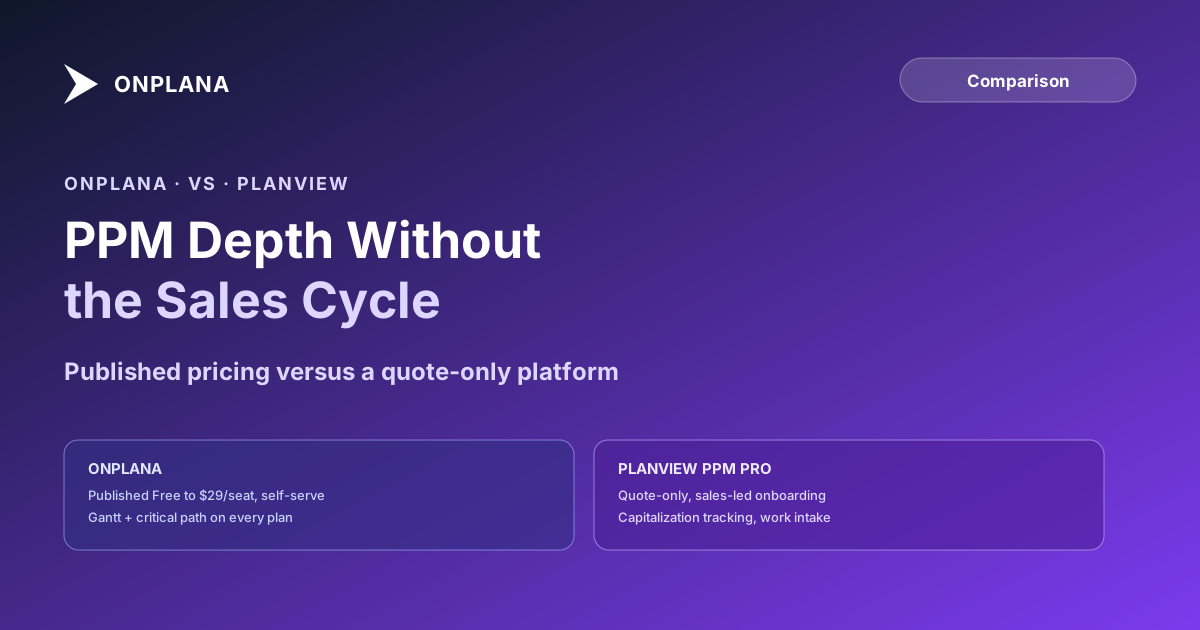
Onplana vs Planview: PPM Depth Without the Sales Cycle
Onplana vs Planview: Planview publishes no pricing and sells through a quote process built for large IT PMOs. Here's what that platform actually requires.
Planview shows up on enterprise PPM shortlists because the brand is genuinely built for that tier, and that reputation is also why teams that don't need that tier end up evaluating it anyway.
The direct answer: Onplana vs Planview comes down to how you want to reach the same scheduling depth. Planview PPM Pro is a quote-only platform sold through a sales cycle, built for mid-market to global IT PMOs that need work-intake scoring, capitalization tracking, and configurable stage gates. Onplana publishes every price, runs dependency scheduling and a critical path on its free tier, and scales the same engine up to a 12-stage governance pipeline at Enterprise, all without a procurement conversation required to see the product.
Planview PPM Pro publishes no pricing; third-party estimates put a starting range near $19 per user per month, with enterprise tiers negotiated by sales. It is built for IT PMOs that need work-intake scoring, portfolio-level capitalization tracking, and configurable stage gates at real scale. Onplana runs Free through $29-per-seat Enterprise, all published, with dependency scheduling and a Gantt and critical path on every plan, a resource pool from Pro, and a 12-stage governance pipeline with gate reviews at Enterprise. Pick Planview when capitalization accounting or large IT demand management is the actual requirement. Pick Onplana when you want the same governance depth without a sales cycle to find out if it fits.
What Planview PPM Pro Actually Is
Planview markets PPM Pro as software to "collect, prioritize, and execute projects," positioned across a maturity range from an emerging PMO to one advancing its practice. Underneath that framing sits a real, deep product: portfolio and project management with automatic health rollups, a resource workbench with demand and capacity views and skills profiles, financial management including budget, forecast, and capitalization tracking, and configurable work-intake workflows with scoring models and stage gates. Planview's own PPM Pro page lists no pricing anywhere; every path leads to a demo request or a sales inquiry, which is standard for a platform sold to the IT PMOs it targets, and also means nobody outside a live deal knows the real number until they're in one.
Onplana vs Planview: Compared on 9 Dimensions
| Dimension | Onplana | Planview PPM Pro |
|---|---|---|
| Pricing | Published: Free / $12 / $20 / $29 per seat, 20% off annual | Not published; quote-only, third-party estimates from ~$19/seat |
| Free tier | Yes: 5 members, 2 projects, Gantt + critical path included | None; demo or trial arranged through sales |
| Time to first login | Minutes, self-serve signup | Sales cycle plus a typical implementation phase |
| Dependency types & critical path | FS, SS, FF, SF + lag, every plan including Free | Included in its scheduling module; depth not published outside a deal |
| Resource management | Enterprise resource pool with capacity planning (Pro+) | Resource workbench with demand, capacity, and skills profiles |
| Financial capitalization tracking | Multi-currency budgets, rate cards, earned value management | Dedicated capex/opex capitalization workflow |
| Stage-gate governance | 12-stage proposal pipeline, weighted gate scoring (Enterprise) | Configurable work-intake scoring and stage gates |
| Deployment | SaaS, or a dedicated deployment in your own Azure subscription (Enterprise+) | SaaS, Planview-hosted |
| Target org size | Free individual use through enterprise, one product line | Emerging to advanced PMOs, mid-market to global enterprise |
The diagram below shows the same split as the table: two products that both reach real PPM depth, from different starting points.
Where Planview Genuinely Wins
Capitalization tracking is the honest edge case: Planview PPM Pro's financial module is purpose-built to split project spend into capex and opex for IT portfolios, a specific accounting need that shows up at large enterprises with formal capitalization policies. Onplana's cost tooling, multi-currency budgets, rate cards, and full earned value management, covers general PMO financial tracking well but isn't built around that specific split. An IT PMO whose finance team already requires capitalization reporting has a real reason to put Planview on the shortlist that has nothing to do with brand recognition.
Where the Sales Cycle Costs You Time
The bigger practical difference shows up before either platform gets evaluated on features at all. Planview requires a sales conversation to see real pricing, and PPM Pro deployments at the scale it's built for typically involve an implementation phase before the tool reflects an actual portfolio. Onplana's free tier ships the full dependency model, Gantt, and critical path with no sales conversation and no time limit, so a team can validate the scheduling engine against a real project before any budget conversation happens at all. The PMO Maturity Assessment is a useful gut check before that conversation: walk through it first to see whether your PMO's current practice actually needs stage-gate governance and portfolio-level capitalization tracking, or whether that's the kind of depth worth growing into rather than buying on day one.
Which One Wins
Planview wins for: IT PMOs that specifically need capex/opex capitalization tracking, or organizations already running a large-scale intake and demand-management process that PPM Pro's scoring models were purpose-built to formalize.
Onplana wins for: teams that want to see real scheduling depth, dependencies, critical path, a resource pool, before committing to anything, and PMOs that want the same governance features Planview is known for (stage gates, weighted reviews, portfolio rollups) at a published price instead of a negotiated one.
PM tool total cost of ownership covers how to model the implementation and training cost that a sales-led platform like Planview adds on top of its license fee, and PM tool evaluation criteria walks through the fuller checklist if Planview is one of several products on your list. The compare hub has side-by-side pages for the tools most commonly shortlisted alongside enterprise PPM platforms, and the rest of the Onplana blog's comparison coverage goes further into how to weigh a published-price tool against a quote-only one.
Run the free PMO Maturity Assessment Answer a short set of questions about your current practice and get a structured read on whether stage-gate governance and portfolio-level reporting are worth buying now or worth growing into first. → Open the assessment
Frequently asked questions
What's the main difference between Onplana and Planview?
Planview PPM Pro is a quote-only enterprise PPM platform built for mid-market to global IT PMOs, sold through a sales cycle with pricing available on request. Onplana publishes every price, runs a real free tier, and scales the same scheduling engine from a five-person team up to enterprise governance without a procurement conversation to get started.
Does Planview publish its pricing?
No. Planview's own product page for PPM Pro directs every visitor to a demo or sales inquiry form rather than listing per-seat costs, and third-party software marketplaces estimate a starting range around $19 per user per month with enterprise tiers negotiated separately.
Is Planview overkill for a mid-size PMO?
It can be. Planview positions PPM Pro for organizations anywhere from an emerging PMO to an advanced one, but the work-intake scoring models, capitalization tracking, and configurable stage gates are built for IT portfolio governance at a scale where those features earn their complexity. A team evaluating its first real scheduling tool is usually better served starting simpler.
Does Onplana have the governance features Planview is known for?
Yes, on Enterprise: a 12-stage proposal pipeline with automatic project creation on approval, multi-reviewer gate reviews with quorum logic, weighted scoring criteria, and a formal Change Control Board. It ships at a published $29 per seat per month rather than a negotiated enterprise contract.
How long does it take to start using each platform?
Onplana's free tier is self-serve: create an account and you're scheduling in minutes, with every dependency type and the Gantt and critical path included at no cost. Planview requires a sales conversation and, for most PPM Pro deployments, an implementation phase before the platform reflects a real portfolio.
Does Onplana support the financial capitalization tracking Planview offers?
Not as a dedicated capex and opex capitalization workflow. Planview PPM Pro's financial management module is built specifically for that IT accounting need. Onplana covers multi-currency budgets, rate cards, and earned value management, which suits general PMO cost tracking but is not a substitute for capitalization-specific accounting.
Can a growing PMO switch from Onplana to something like Planview later if it needs to?
Yes, and for most PMOs that point never actually arrives. The organizations that eventually need Planview-specific capabilities, capitalization accounting or large-scale IT demand management, tend to already know it going in. For everyone else, starting on a platform with published pricing and no minimum commitment costs nothing to try first.
Ready to make the switch?
Start your free Onplana account and import your existing projects in minutes.