AI Agent Issue Triage: What Not to Delegate
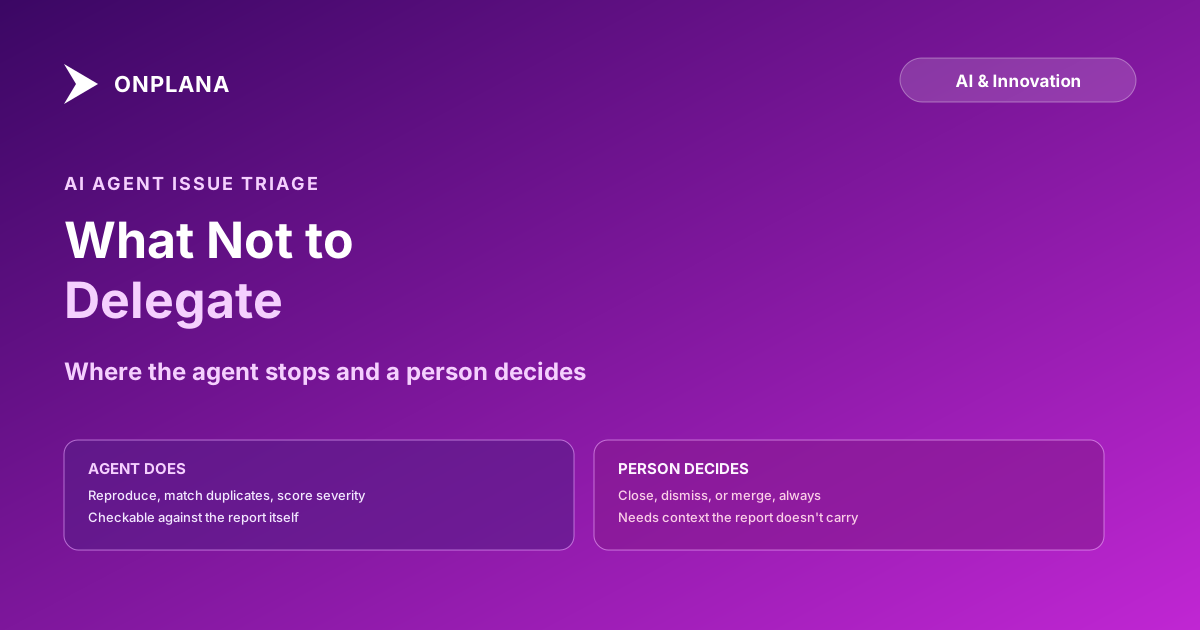
AI agent issue triage works well for reproduction, duplicate detection, and severity from evidence. It should never decide that an issue isn't real.
The highest-value agent job in a delivery pipeline is also the easiest one to get badly wrong in one specific way: an agent that triages issues all day can be excellent at almost everything in that job and still cause real damage the one time it decides a problem isn't real.
The direct answer: AI agent issue triage is strong at reproducing a reported bug from its steps, flagging likely duplicates, and assigning severity based on the evidence in the report, and it should never be the thing that decides an issue is invalid or not worth tracking. Reproduction and duplicate detection are checkable against the report itself. Deciding something isn't real is a judgment call about whether a problem exists at all, and that call belongs to a person on every pass through the queue, not just the ones that look ambiguous.
Agent-driven issue triage works well for reproduction, duplicate detection, and severity scoring from evidence already in the report, all tasks with a checkable target. It should stop short of closing, dismissing, or merging an issue on its own, because that decision is reversible and cheap to get right only if a person makes the final call. Measure the setup by how often its severity and duplicate matches agree with a person's, and staff the human review step for the surge, since triage throughput scales with report volume but review capacity does not.
Where AI Agent Issue Triage Earns Its Place in the Queue
Triage has a structural feature that makes it a good fit for an agent: most of what a triage pass needs is already sitting in the report. Reproduction steps either produce the described behavior or they don't. A duplicate candidate either shares the same error signature, the same failing component, and the same trigger condition as an existing entry, or it doesn't. Severity, scoped honestly, follows from how many users are affected and whether a workaround exists, both facts that live in the report and the surrounding data rather than requiring outside judgment. The Onplana issue log is built around exactly this list: nine issue types, four severities, and a lifecycle that separates raising a problem from deciding what to do about it, which is the structure that lets an agent work the first half without needing authority over the second.
The One Call That Stays With a Person
Reproduction and duplicate matching are checkable: run the steps, compare the signature, done. Deciding an issue is not real is a different kind of decision, because it requires weighing context the report does not always contain: a customer relationship that changes the calculus, a workaround that makes "low severity" the wrong read, a related fix already in flight that makes a duplicate call more nuanced than a text match suggests. An agent triaging the report in front of it has no way to know what it was not told, and a wrong close decision does not surface itself the way a wrong severity tag does. Nobody reviews a closed issue looking for what got closed incorrectly; the whole point of closing something is that people stop looking at it. Reviewing AI-generated work covers the same asymmetry from the review side: the failure that survives a skim is the one dressed as a normal, completed outcome, and a closed issue is exactly that kind of outcome.
What Agent Triage Gets Wrong When the Report Itself Is Misleading
A report's wording is content an agent weighs, not a verified account of what happened. A title that reads as minor, phrased casually by whoever filed it, can pull a severity score down even when the reproduction underneath shows a worse pattern than the framing suggests. The fix is ordering: run the reproduction and let its result outweigh the report's own framing, rather than treating the title and description as pre-scored inputs. Deterministic automation versus agentic automation covers the underlying reason this ordering matters: reproduction is a deterministic check with a fixed outcome, while reading a title for severity is a judgment call that inherits whatever bias the original wording carried.
Mapping the Triage Pass
| Step | Agent does this | A person does this |
|---|---|---|
| Reproduce from the reported steps | Yes: pass, fail, or can't reproduce | Reviews only if the agent can't reproduce |
| Match against existing issues | Yes: flags likely duplicates by signature | Confirms before a merge commits |
| Score severity from evidence | Yes: proposes a score with the evidence attached | Adjusts for context the report doesn't carry |
| Decide the issue is not real | No | Always, on every close or dismiss |
| Escalate based on customer or business context | No | Always, since this needs information outside the report |
The diagram below shows the same boundary as a branching flow: everything on the left of the split is delegated, everything on the right holds for a person regardless of how confident the agent's recommendation is.
Measuring Whether It Helped
The useful metric is not throughput. It's agreement: how often the agent's severity and duplicate calls match what a person assigns on independent review, tracked over time rather than on a single sample. A rising disagreement rate is a scope signal, narrow what the agent handles rather than adding a second layer of review on top of the first. The separate number worth watching is the human override rate at the close decision itself, since that step existing at all is what makes the rest of the delegation safe. Who is accountable when an agent is wrong covers what happens when that gate gets skipped: the accountability doesn't disappear, it just lands on whoever approved skipping it.
Staff for the surge, not just the steady state. Reproduction and duplicate matching scale with report volume because an agent can run more of them in parallel; the human review step at the close decision does not get faster just because more reports arrived during a bad release. A queue that triages fast but reviews at the old pace backs up at exactly the gate that has to hold. AI agents in software development covers the same pattern one stage over in the delivery lifecycle: the stages with a checkable target scale easily, and the ones needing judgment become the bottleneck once the easy stages speed up.
The rest of the Onplana blog's AI and Innovation coverage goes further into the permission and governance boundaries a delegation like this needs before an agent gets anywhere near the close button on a real issue queue.
Frequently asked questions
What is AI agent issue triage?
AI agent issue triage is an agent working an incoming issue queue: reading each report, checking whether it reproduces, flagging likely duplicates, and assigning a severity based on the evidence in the report. It ends with the queue sorted and evidenced, not with issues closed.
What should never be delegated to an agent doing triage?
Deciding that a reported issue is not real. Closing something as invalid, works-as-intended, or a duplicate is a judgment call about whether a problem exists at all, and getting it wrong silently erases a real one. That call stays with a person, every time.
Can an agent close an issue on its own during triage?
It should not be allowed to. The safe pattern lets an agent reproduce, evidence, and recommend a severity or a likely duplicate match, then stops and hands the recommendation to a person before any close, dismiss, or merge action commits.
Can a misleading report title or description steer an agent into the wrong call?
Yes. An agent reads a report's wording as content, not as a verified account of what happened, so a report that sounds minor because of how it is phrased can get triaged as low severity even when the underlying reproduction shows otherwise. Weight the reproduction evidence over the report's own framing.
How do you measure whether agent-driven triage is actually helping?
Track how often its severity and duplicate calls match what a person would have assigned, and separately, how often a human override at the close decision catches something the agent's recommendation missed. A rising override rate is a signal to narrow the agent's scope, not a reason to remove the review step.
What happens to the backlog if agent usage triples during a bad release?
Throughput on reproduction and duplicate detection scales with the report volume, but the human review step at the close decision does not get faster just because more reports arrived. Plan the review capacity for the surge, not just the triage capacity, or the queue backs up at the one gate that has to hold.
Where does agent-driven triage fall short?
On reports that need context outside the report itself: a customer relationship that makes a low-severity bug worth escalating anyway, or a fix already in flight that makes a duplicate call more nuanced than the text suggests. An agent triages the report in front of it; it does not know what it was not told.
Ready to make the switch?
Start your free Onplana account and import your existing projects in minutes.