Idea to Project Proposal: The Governance Path
An idea to project proposal always lands in DRAFT first: promote to a task for small asks, or a proposal when it needs a business case and a gate.
Most tools that let you capture a "future idea" do the same thing with every single one once you act on it: they turn it into assigned work, an owner, a due date, a spot on someone's list. That's fine for the idea that's really just a task nobody has typed up yet. It's wrong for the idea that needs a business case, a budget estimate, and a sponsor's sign-off before anyone should touch it, and treating both the same way is how a governance process quietly gets skipped.
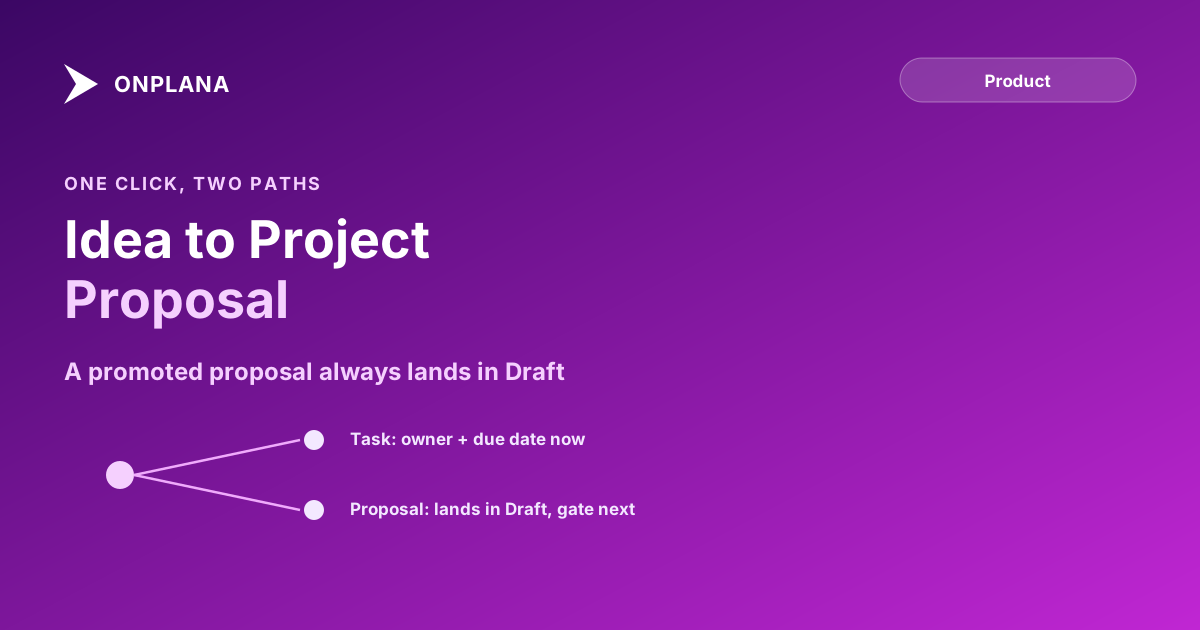
The direct answer: the idea to project proposal path in Onplana routes a captured idea to one of two places when you promote it, never automatically. Promote it to a task when the work is small and the answer is already obvious; the task gets an owner and a due date immediately. Promote it to a proposal when it needs a business case and a gate; the proposal always lands in Draft, the same starting stage as any proposal written from scratch, so promoting an idea can never skip a review it would otherwise have needed. Either way, the link back to the original idea, and any AI feedback gathered on it, stays attached rather than getting discarded.
An idea in Onplana promotes to one of two things, never both and never automatically: a task, if the work is obvious and small, or a governance proposal, if it needs a business case and a decision. A promoted proposal always starts in Draft, so promotion can never be used to skip a gate. AI feedback on an idea (a critique, open questions, risks, a recommended route) is advisory only; a person still decides whether and how to promote it. Idea capture and promotion are free on every plan; the full multi-stage gate-review pipeline the proposal then moves through is an Enterprise capability.
Why One Promotion Path Isn't Enough
The problem with a single "convert to work" button is that it treats every idea as the same size. "Rename the sprint board columns" and "build a second regional data center" are both, technically, ideas. Forcing the first one through a business-case template is friction nobody needs. Letting the second one become an owned, due-dated task with no review is how projects get real budget commitment without anyone formally deciding to commit it.
Onplana's Ideas feature keeps the decision explicit by offering two distinct promotion targets rather than one generic "make this real" action, and treating idea capture itself as a separate object from a task is what makes that split possible: an idea has no owner and no due date until someone actively decides to give it one, and that decision now has two different shapes to choose from.
Promoting to a Task: When the Answer Is Already Obvious
A task is the right target when nobody actually needs to be convinced. The scope is small, the cost is negligible, and the only reason it wasn't already a task is that someone hadn't typed it in yet. Promoting an idea to a task assigns an owner and a due date the same way creating a task from scratch would; the only difference is that the task carries a link back to the idea it came from, so the original framing and any discussion around it aren't lost.
The Idea to Project Proposal Path: Why It Always Lands in Draft
A proposal is the right target when the idea needs a decision before it needs an owner: a business case, a rough budget estimate, or a sign-off from someone who isn't the person who had the idea. Promoting to a proposal does not create assigned work and does not skip a review. It creates the proposal in Draft, the same first stage every proposal starts in, visible only to the person who promoted it until they submit it for review.
The diagram below shows both promotion paths starting from the same captured idea, and why only one of them creates work immediately.
What the AI Feedback Pass Actually Does
Requesting AI feedback on an idea, at any point before promotion, returns a critique of the idea itself, a list of open questions it hasn't answered, the risks it's likely to run into, and a recommended route between the task and proposal paths. None of that is binding. The feedback is aimed at sharpening the idea before it costs anyone real time, the same way a colleague reading a draft would push back on a weak assumption; it is not a decision-maker standing in for the person who has to actually choose whether and how to promote it.
Task vs Proposal, at a Glance
| Promote to Task | Promote to Proposal | |
|---|---|---|
| Right for | Small, obvious work | Anything needing a business case |
| Owner assigned | Immediately | Not until the proposal is approved |
| Due date assigned | Immediately | Not until execution begins |
| Starting stage | N/A, it's just a task | Draft (stage 1 of 12) |
| Requires a decision first | No | Yes, at least a submit-for-review step |
| Link to original idea | Preserved | Preserved |
| Available on | Every plan | Every plan (the proposal object itself) |
The Governance Pipeline a Promoted Proposal Enters
A proposal's Draft stage is the same on every plan: it sits with the person who promoted it until they submit it. What differs by plan is the review machinery a submitted proposal moves through next. Onplana's full governance pipeline is a twelve-stage lifecycle with configurable multi-reviewer gates, quorum logic, weighted scoring criteria, and a formal Change Control Board for scope and budget changes after approval; that pipeline, along with the reviewer-panel and CCB machinery behind it, is an Enterprise capability. A promoted proposal is never blocked from existing on a lower plan; the depth of formal review it can pass through before becoming a project is what scales with the plan.
This is the same reasoning behind keeping a stage-gate process distinct from a simple approval workflow: a gate that changes a proposal's status, unlocks budget, and writes an audit record is a structurally different thing from a checkbox that says "approved," and idea promotion is the entry point into that structure rather than a way around it. For PMOs weighing whether that level of gate discipline is where their intake process needs to go next, demand management covers the funnel a proposal sits inside before it ever reaches a gate.
What changes next for a team adopting this: stop letting "good idea, let's do it" become an owned task with a due date before anyone has priced it. Capture it as an idea first, get the AI feedback pass if the framing is still rough, and let the promotion choice, task or proposal, be the first real decision made about it rather than an accident of which button someone happened to click.
The rest of the Onplana blog covers the wider work-intake model, from where an idea starts to how a project runs once the plan is approved.
Frequently asked questions
What's the difference between promoting an idea to a task and promoting it to a proposal?
A task is for work that's already obvious: someone owns it, it gets a due date, and it starts immediately. A proposal is for anything that needs a business case and a decision first. Promoting to a proposal never assigns work; it lands the idea in Draft, one step before anyone commits real time to it.
Does promoting an idea to a proposal skip the approval gate?
No. A promoted proposal always starts in Draft, the same stage as a proposal written from scratch. Promotion changes the object type, not its place in the review process, so there's no shortcut from idea straight to an approved project.
What stage does a promoted proposal start in?
Draft. That's the first of the twelve stages in Onplana's governance pipeline, visible to the person who promoted it until they submit it for review. Nothing advances further on its own.
Is promoting an idea to a task or proposal available on every Onplana plan?
Yes. Idea capture, AI feedback, and the one-click promotion to a task or a proposal are free on every plan, including Free. The full twelve-stage governance pipeline those proposals move through, with multi-reviewer gates, weighted scoring, and a Change Control Board, is an Enterprise capability.
What does the AI feedback pass on an idea actually decide?
Nothing. It returns a critique, open questions, risks, and a recommended route, aimed at sharpening the idea before anyone spends real time on it. The person who captured the idea still decides whether and how to promote it.
Do you lose the original idea once it's promoted?
No. The task or proposal that comes out of a promotion stays linked back to the idea that started it, including whatever discussion and AI feedback happened before the promotion, rather than being copied and disconnected.
What happens after an idea becomes a proposal?
The proposal sits in Draft until someone submits it for review. From there it's a normal proposal: it moves through whatever gates the organization has configured, the same as one that was never an idea in the first place.
Ready to make the switch?
Start your free Onplana account and import your existing projects in minutes.