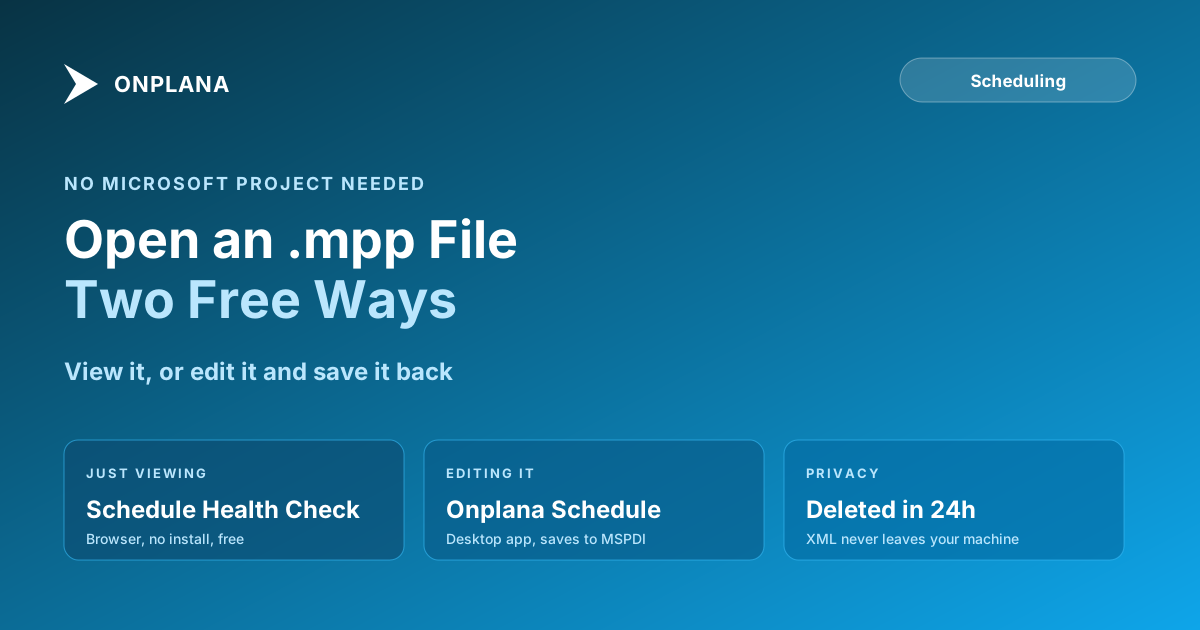
Open an .mpp File Without Microsoft Project (2 Free Ways)
Open an .mpp file without Microsoft Project using the free Schedule Health Check for a read-only view, or Onplana Schedule to open, edit, and save it back.
Somewhere between the file landing in your inbox and you actually needing to look at it, most people assume the next step is a Microsoft 365 admin ticket and a paid seat. It isn't.
The direct answer: you can open a Microsoft Project .mpp file without a Microsoft Project license at all. A free, read-only Schedule Health Check reads the file and shows you what's in it in under a minute, and the free Onplana Schedule desktop app opens the same file, lets you edit it, and saves back to a format Microsoft Project reads. The alternative has a real price tag: Microsoft's own pricing lists Planner and Project Plan 3, the tier that includes the desktop Project client, at $30 per user per month, just to open a file someone else built.
In short. You do not need a Microsoft Project license to open a
.mppfile. Upload it to the free Schedule Health Check for a read-only look at tasks, dependencies, and the critical path, or open it directly in Onplana Schedule, a free desktop app for Windows and Mac that edits it and saves back to a format Microsoft Project reads. A binary.mppis converted on the server and the converted copy is deleted within 24 hours; an MSPDI XML export never leaves your machine at all.
Two free ways to open a .mpp file, and which one you need
What you actually need to do with the file decides which tool is right:
- You just need to look at it. Someone sent you a schedule and you need to check dates, dependencies, or whether the plan is realistic before a meeting. Use the Schedule Health Check: upload the file, get a per-finding breakdown back in under a minute, and close the tab.
- You need to keep working on it. You're taking over a schedule, correcting it, or building on it. Use Onplana Schedule: it opens the file on your desktop, lets you edit the Gantt and the grid, and saves back to a format the original owner's Microsoft Project can still open.
Schedule Health Check vs Onplana Schedule, side by side
| Schedule Health Check | Onplana Schedule | |
|---|---|---|
| Cost | Free, no account | Free |
| Install required | No, runs in the browser | Yes, desktop app for Windows and Mac |
| What it shows | Tasks, dependencies, critical path, a per-finding audit | Full Gantt and grid: name, duration, dates, predecessors, resources, percent complete, outline, float, milestones |
| Can you edit the file | No, read-only | Yes, with undo on every change |
| Saves back to Microsoft Project format | No | Yes, to MSPDI XML |
| File size / task limit | 20 MB, 20,000 tasks | No published cap; opens what a desktop machine can hold in memory |
What happens to your file when you open it
The privacy answer is different depending on which file format you're holding. A binary .mpp file has to be converted before either tool can read it: that conversion happens on Onplana's servers, and the converted copy is deleted within 24 hours. If the schedule was exported as MSPDI XML instead (File → Save As → XML, inside Microsoft Project), Onplana Schedule reads it directly on your machine and the file never leaves the desktop at all. If keeping the file entirely local matters more than convenience, ask whoever sent it for the XML export rather than the binary .mpp.
Opening and editing the file in Onplana Schedule, step by step
- Read the current release details on the Onplana Schedule page and install it for Windows or Mac.
- Open the
.mppor MSPDI XML file: file associations let you double-click it directly, or open it from inside the app. - Review the Gantt and grid: name, duration, start, finish, predecessors, resources, percent complete, outline level, critical path, float, milestones, and baseline bars if the file carries them.
- Edit what needs correcting. Every change (cells, insert, delete, indent, outdent, links dragged with type and lag, all eight constraint types) supports undo, and the schedule reschedules automatically as you go.
- Save back to MSPDI XML so the file still opens cleanly in Microsoft Project for whoever sent it to you.
- If you want the schedule working as a shared plan rather than a file passed around by email, use Publish to create the project in Onplana directly from the desktop app.
When you still need Microsoft Project itself
Onplana Schedule is not a full replacement for every Microsoft Project workflow, and it's worth saying where it stops. If your organization runs Project Online or Project Server with enterprise resource pools, enterprise custom fields defined centrally on that server, or macros built in VBA, those depend on the server or the desktop client directly and won't travel through a .mpp file on their own. For the common case, someone emailed you a schedule and you need to read it, correct it, or hand it back, opening it without a Microsoft Project license is the faster and cheaper path both ways.
The diagram below shows the decision in one branch: what you need to do with the file determines which free option to use, and the privacy handling depends on the file format you start with.
Related reading: 7 hidden killers in your MS Project schedule covers what to actually look for once the file is open, and MSPDI XML explained walks through what the XML export format contains if you want the fully local path.
Run the free Schedule Health Check Upload your
.mppor MSPDI XML file and get a per-finding breakdown of dependency issues, constraint conflicts, dangling tasks, and the real critical path, computed from the dependency graph. No signup, no credit card. → Run the Schedule Health Check
Microsoft Project Online™ is a trademark of Microsoft Corporation. Onplana is not affiliated with Microsoft.
Frequently asked questions
Can I open a Microsoft Project .mpp file without buying a Microsoft Project license?
Yes. The free Schedule Health Check reads a .mpp file and shows you tasks, dependencies, and the critical path with no install and no account. If you need to edit the file and keep working on it, the free Onplana Schedule desktop app opens and edits it directly.
Is it safe to upload a binary .mpp file to a website to open it?
With Onplana's tools, a binary .mpp is converted on Onplana's servers and the converted copy is deleted within 24 hours. If you'd rather nothing leave your machine at all, export the schedule to MSPDI XML first; an XML file never leaves the desktop when opened in Onplana Schedule.
Will opening a .mpp file this way let me edit it and save it back to Microsoft Project format?
Yes, in Onplana Schedule. It edits the Gantt and grid directly, then saves back to MSPDI XML, a format Microsoft Project reads natively.
Is there a file size or task limit for the free Schedule Health Check?
Yes: files up to 20 MB and 20,000 tasks. Most single-project .mpp files are well under both limits; a file that size usually belongs to a portfolio export rather than one project.
Do the dependencies and constraints survive opening the file this way?
Yes. All four dependency types with lag, all eight Microsoft Project constraint types, custom fields, milestones, and costs come through intact, since the file is being read and edited rather than rebuilt from scratch.
Ready to make the switch?
Start your free Onplana account and import your existing projects in minutes.